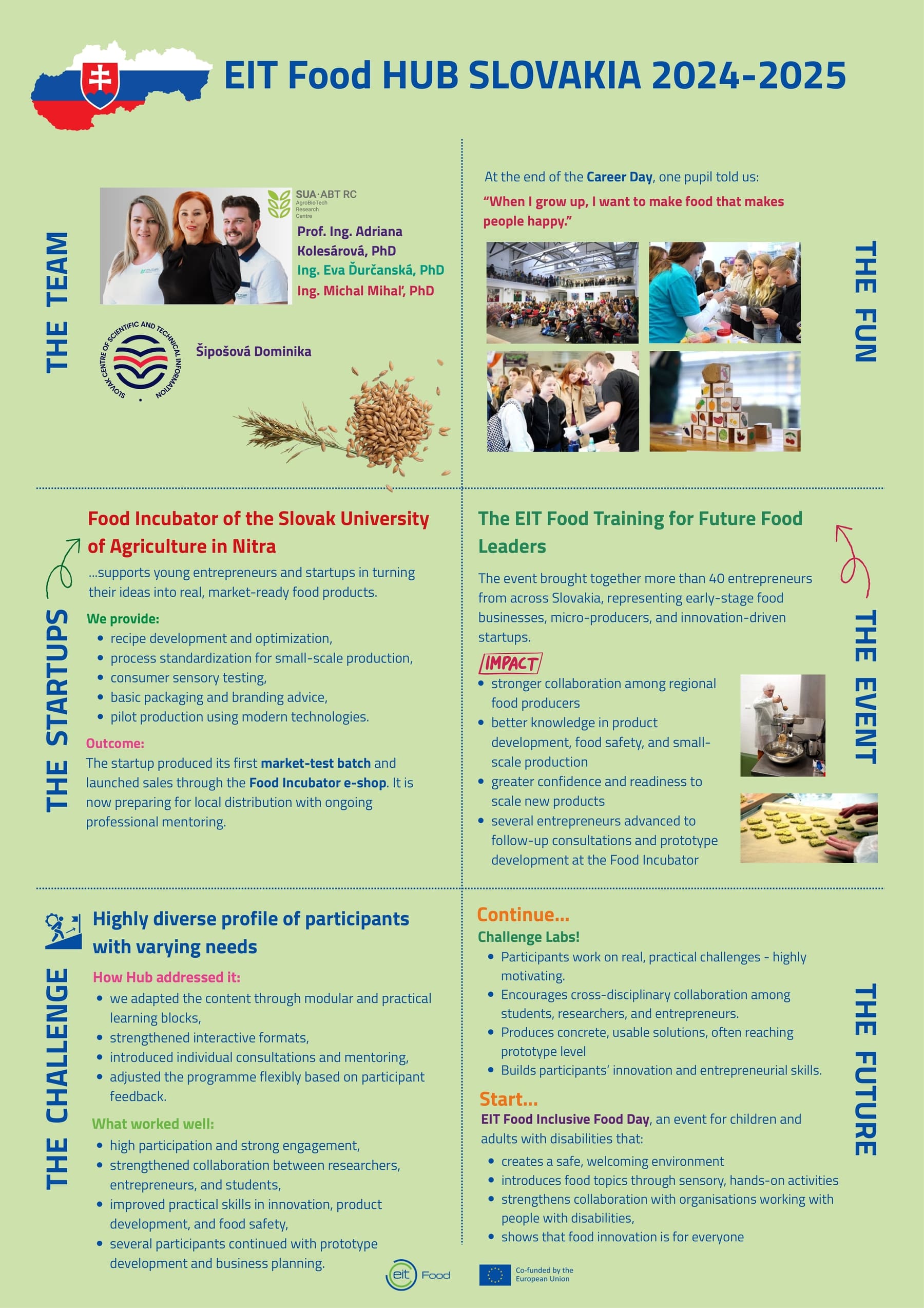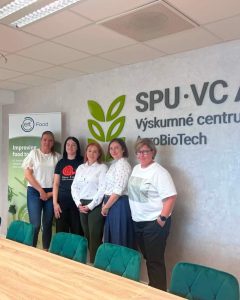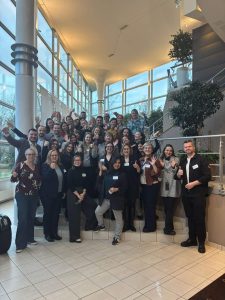

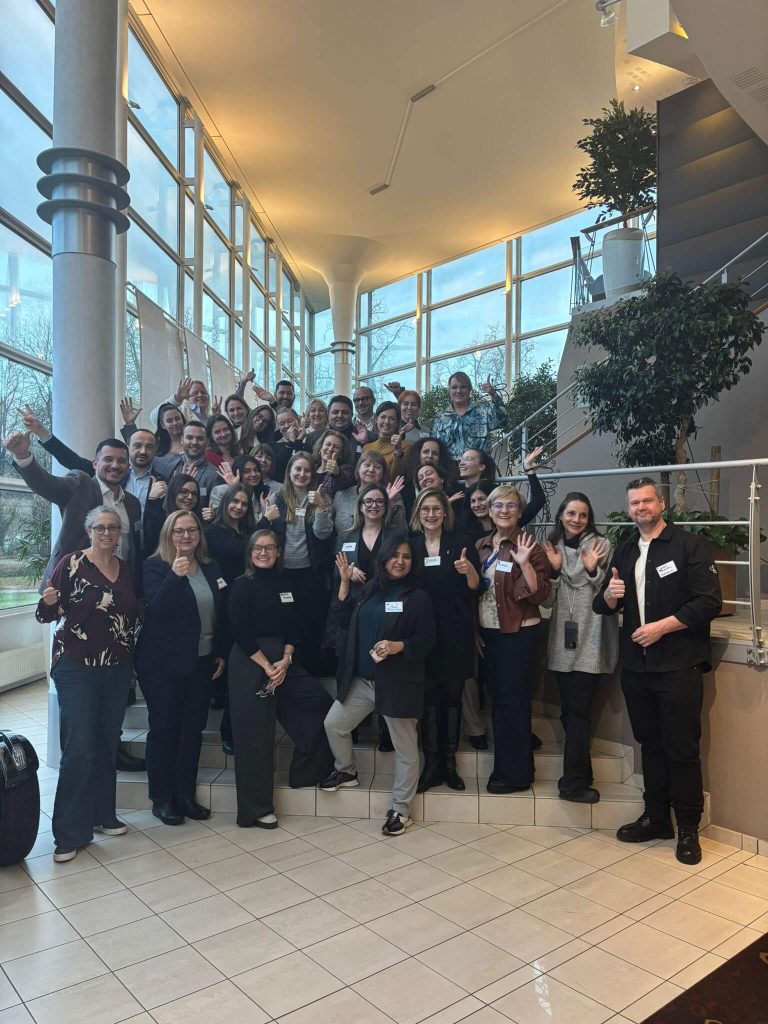
The annual working meeting of the EIT Food Hub project took place on 26 November 2025 in Budapest. The Slovak Republic was represented by prof. Ing. Adriana Kolesárová, PhD., and Ing. Eva Ďurčanská, PhD., from the AgroBioTech Research Centre of the Slovak University of Agriculture in Nitra.
For the EIT Food Hub in Slovakia, operating at the Slovak University of Agriculture in Nitra, 2025 was marked by growth, cooperation and the connection of research with practice. An important partner of the Hub was also the Slovak Centre of Scientific and Technical Information, which co-participated in activities supporting start-ups, information dissemination and the development of innovation in the agri-food sector.
A key event was the EIT Food Round Table Discussion: Regenerative Agriculture and Plant Production Under Changing Environmental Conditions, which opened an expert discussion on adapting production to changing environmental conditions. Experts from Slovakia and abroad presented challenges as well as solutions in the areas of soil health, crop production, water management and digitalisation opportunities. The outcomes included recommendations directly applicable in the practice of Slovak farmers.
Training for the leaders of the food future also played an important role in the Hub’s activities. The programme EIT Food Training for Future Food Leaders: New Generation of Food, implemented in cooperation with the Food Incubator of the Slovak University of Agriculture in Nitra, taught participants how to transform an idea into a food product ready for the market. Emphasis was placed on circularity, the efficient use of secondary raw materials and connecting research with food processing practice.
For schools, the FoodEducators programme continued. During Career Day, pupils had the opportunity to experience food-related experiments, analyse food properties, prepare their own recipes and learn about local sources of nutrition.
An important part of the year was also the Food Incubator of the Slovak University of Agriculture in Nitra, where new products were developed – from cereal mixes to fermented pastes and healthy snacks. Business plans were evaluated, early-stage innovators received mentoring, and the university e-shop continued its operation, bringing the results of students’ work closer to the public.
More information